A featured guide to eating with ahimsa at Trishla Giri — what a Jain kitchen is for, who may sit, and how to behave as a guest.
Meals as part of yatra
A Jain aharshala (also bhojanashala, bhojanalaya) is not a restaurant with a view of a temple. It is a kitchen of restraint. Grain is cooked so that pilgrims can keep their vows on the road: no meat, no eggs, no alcohol, and — in a classical Digambar kitchen — no foods that destroy a whole plant or harbour countless tiny lives in soil and root.
At Shree Mata Trishala Atishay Kshetra, visitors have independently noted that a bhojanalaya is available on the kshetra and has been free of cost, and that food arrangements “started recently” relative to older reviews, with advance booking advised. This website could not verify a printed daily menu or clock times for that kitchen. Treat everything below as a best-practice briefing, then confirm the day’s sitting with the managers when you arrive — or send an enquiry before a group yatra.
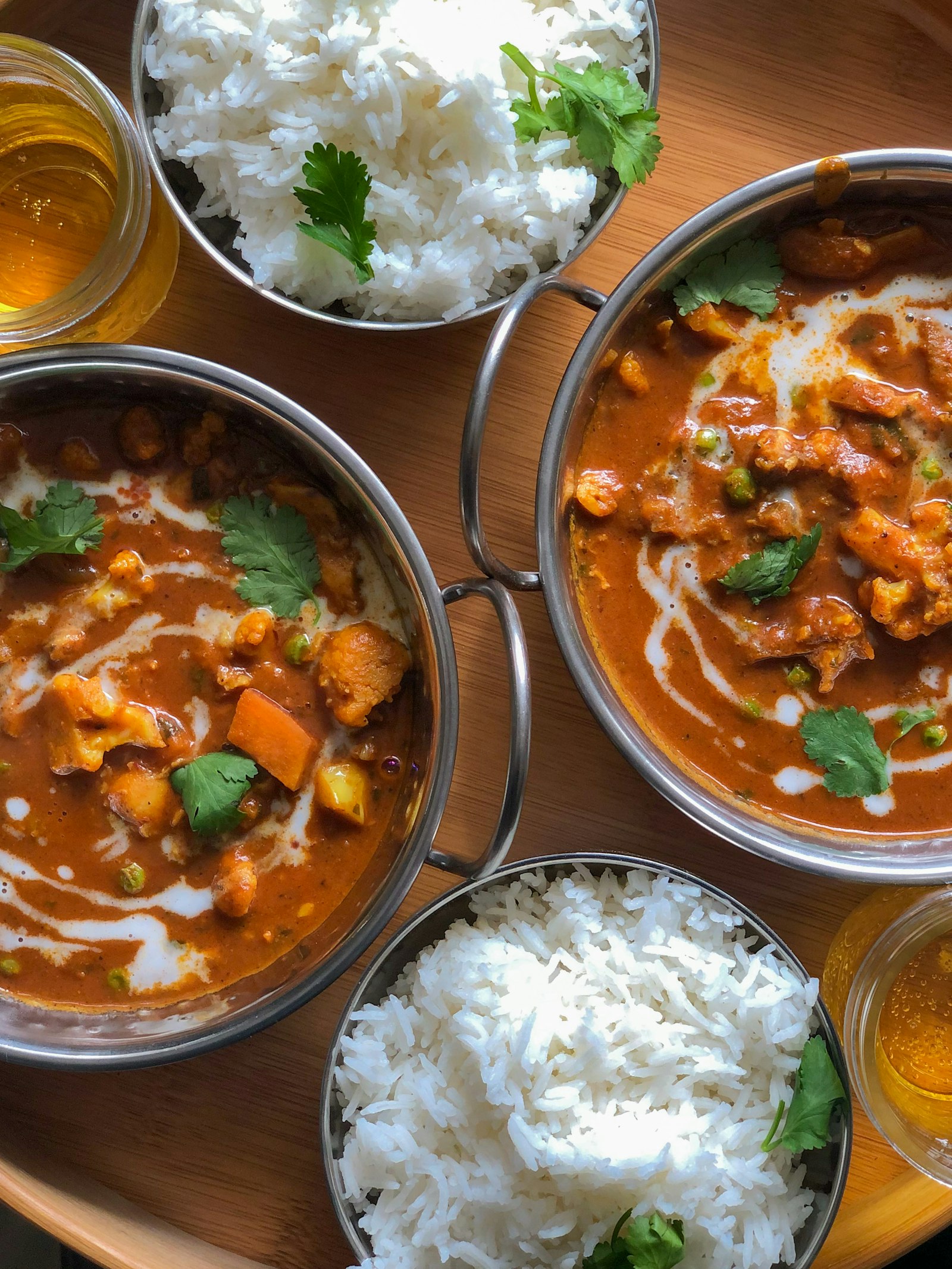
Illustration only: a vegetarian thali. The kshetra kitchen will be simpler and stricter than a restaurant plate. Photo: Unsplash.
What this kitchen typically serves — and refuses
Indian Jain households vary. Monks follow a tighter list than lay families. A tirth aharshala usually aims at the stricter lay standard so that munis’ disciples, elderly vrati, and ordinary guests can eat from the same line.
Above-ground vegetables: bottle gourd, pumpkin, cabbage, tomato (kitchen-dependent), beans, leafy greens that the cook accepts.
Lentils and dals prepared without onion or garlic.
Milk, curd, ghee, when the kitchen is lacto-vegetarian (common in North Indian Digambar shrines).
Jaggery or sugar sweets on festival days, if announced.
Water filtered and handled according to house rules.
Typically not served
Meat, fish, eggs, gelatin, or hidden non-veg stock — ever.
Alcohol, vinegar in many kitchens, fermented “unknown” sauces.
Root vegetables: potato, onion, garlic, carrot, radish, beet, ginger, turmeric root, yam, taro — because harvesting kills the plant and disturbs soil jivas.
Mushrooms and fungi.
Stale food kept overnight (vasī) in stricter practice.
Meals after sunset (ratribhojan) on the premises.
Onion and garlic are the requests guests make most often, and the ones a Jain cook is least able to honour. Do not bring outside food that breaks these rules into the dining hall or temple compound.
Who can eat
Traditional bhojanashala writing says that anyone who accepts Jain principles of the table may sit — not only those born Jain. In practice: pilgrims, local devotees, researchers, and respectful tourists who will eat what is cooked. You are a guest of dana, not a customer. If the hall is full, or if a sitting is reserved for a visiting sangh, wait or return at the next daylight meal.
Children are usually welcome; teach them not to throw grain. If you have a severe allergy, speak to the kitchen before sitting — a seva kitchen cannot run a modern allergen programme, and “Jain” does not mean “nut-free.”
Etiquette at the sitting
Before
Wash hands. Remove shoes if the hall requires it. Sit where you are shown. Many houses recite Navkar silently. Do not photograph people eating without permission; some halls forbid cameras entirely.
During
Take only what you will finish. Do not talk with a full mouth, criticise the cook, or mix leftover bites back into a common vessel. If a grain falls, pick it up. Keep voice and phone down.
After
Leave the pattal or thali as instructed. A donation box, if present, is voluntary. Thank the volunteers. Do not linger in the kitchen. Daylight hours close earlier than city restaurants — plan your return to the hotel accordingly.
Hours, seva, and what we could not verify
Classical pattern at other Digambar dharamshalas is roughly: navkarshi / breakfast after sunrise until mid-morning; lunch around noon; chovihar in late afternoon, ending before sunset. We did not find an official printed timetable for Trishla Giri’s aharshala. Group leaders should write ahead (use the enquiry form) with date, headcount, and any child or elderly needs.
Seva: if the meal is free, the right response is gratitude and, if you can, grain, oil, or a quiet donation — not bargaining. Kitchen seva (cutting, serving, washing) is a privilege offered by the trust, not a walk-in job for tourists.
Notes from the site database
Pure Jain vegetarian kitchen
Meals at a typical Digambar aharshala avoid meat, eggs, alcohol, and usually onion, garlic, and root vegetables.
Free / donation-based seva
Visitor notes describe a bhojanalaya on the kshetra, often free of cost. Confirm current practice with the management.
Book groups in advance
Reviews mention that food facilities are active and that booking should be done in advance, especially for yatra groups.
Printable aharshala checklist
Ask on arrival: today’s meal times, whether the hall is open to drop-in guests, and whether groups must pre-book.
Do not expect onion, garlic, potato, or eggs.
Eat in daylight; do not request dinner after dark.
Finish your plate; grain is sacred.
Dress modestly; tobacco and liquor have no place on the kshetra.
For sanghs, send numbers and date before you travel.